Table of Contents
- What Is an Assumable Mortgage?
- When Are Assumable Mortgages Worth It?
- When Are They Not Worth It?
- How to Calculate Your Savings
- Final Verdict
Are Assumable Mortgages Worth It?
Assumable mortgages can be one of the most powerful financing opportunities in today’s housing market—but they are not automatically the right choice for every buyer.
In a higher-interest-rate environment, taking over a seller’s existing low-rate mortgage can create major monthly savings. However, the full picture depends on more than just the interest rate.
So are assumable mortgages worth it? Buyers also need to understand the equity gap, cash needed to close, lender approval requirements, and long-term financial impact before deciding whether an assumable mortgage is truly worth it.
What Is an Assumable Mortgage?
An assumable mortgage allows a buyer to take over the seller’s existing home loan instead of applying for a brand-new mortgage.
This usually includes:
- The current interest rate
- The remaining loan balance
- The repayment schedule
- The remaining loan term
The most common assumable loans are:
- VA loans
- FHA loans
- USDA loans
Most conventional loans are not assumable.
Why Buyers Are Interested in Assumable Mortgages
The biggest reason is simple:
Lower Interest Rates
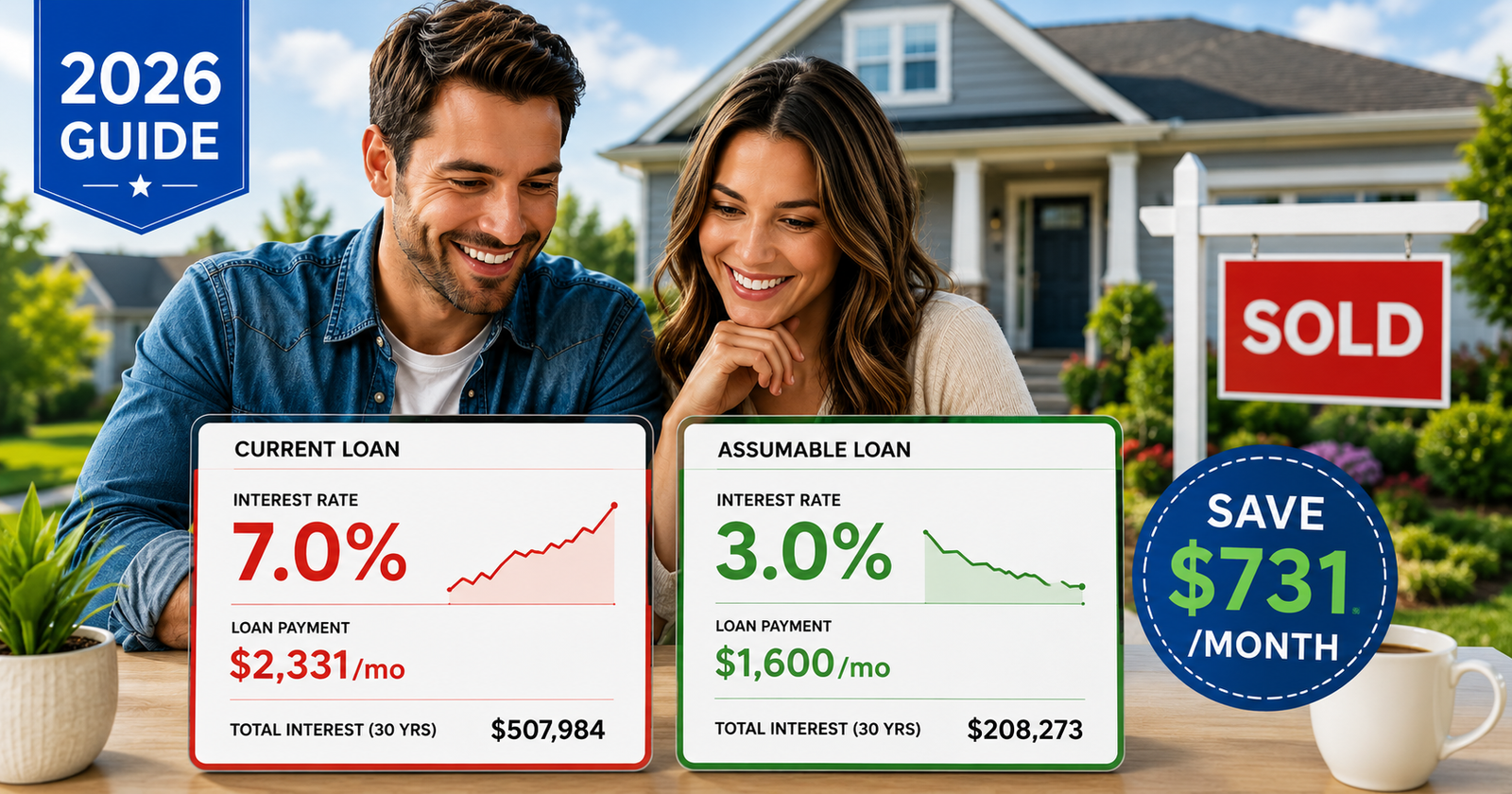
If a seller locked in a mortgage at 2.75%, 3.25%, or even 4%—and today’s rates are closer to 6.5% or 7%—assuming that loan can save a buyer hundreds or even thousands of dollars per month.
That can mean:
- Lower monthly payments
- Lower total interest over the life of the loan
- Stronger buying power
- Improved long-term affordability
When an Assumable Mortgage Is Worth It
1. The Existing Interest Rate Is Significantly Lower
If the seller’s mortgage rate is much lower than current market rates, the monthly savings can be substantial.
This is usually the biggest reason assumptions make sense.
2. The Equity Gap Is Manageable
The buyer must cover the difference between the home’s purchase price and the seller’s remaining loan balance.
This is called the equity gap.
If that gap is small—or the buyer has enough cash or second financing available—the deal becomes much stronger.
3. The Buyer Plans to Stay in the Home Long-Term
The longer a buyer stays in the property, the more valuable the lower interest rate becomes.
Long-term ownership increases the total savings significantly.
4. The Buyer Can Qualify with the Lender
Assumptions still require lender approval. If the buyer qualifies smoothly, the process is much more attractive.
The Consumer Financial Protection Bureau (CFPB) notes that when you assume a mortgage, you take on the seller’s remaining loan obligations at their original rate. Whether are assumable mortgages worth it in your case depends on the size of the rate gap and equity gap.
When an Assumable Mortgage May NOT Be Worth It
1. The Equity Gap Is Too Large
Sometimes the seller has a low-rate mortgage—but also has a large amount of equity.
If the buyer needs to bring a huge amount of cash to closing, the deal may no longer make financial sense.
2. The Seller’s Rate Is Not Much Better
If the existing rate is only slightly lower than today’s market rate, the savings may not justify the complexity.
3. The Buyer Needs Fast Closing
Assumable mortgages often take longer than standard financing because lender approval is required.
Many assumptions take 45–90 days or more.
4. The Buyer Has Better Financing Options
In some situations, a strong buyer may qualify for special loan programs or incentives that make a new mortgage more attractive than an assumption.
Example: Is It Worth It?
Imagine:
- Seller’s VA loan rate: 2.9%
- Current market mortgage rate: 6.8%
- Monthly savings: $700+
That sounds incredible—but if the buyer also needs to bring $120,000 cash to cover the equity gap, the decision becomes much more complex.
This is why buyers must look at the full financial picture, not just the rate.
Questions to Ask Before Moving Forward
- What is the current interest rate?
- What is the remaining loan balance?
- How much is the equity gap?
- How much cash is needed to close?
- Can the buyer qualify with the lender?
- What are the total monthly savings?
- How long does the buyer plan to keep the property?
Use Our Are Assumable Mortgages Worth It Calculator
Before assuming any mortgage, buyers should use an are assumable mortgages worth it calculator to compare:
- Existing loan payment
- New mortgage payment at today’s rate
- Cash needed for the equity gap
- Total monthly savings
- Long-term interest savings
This is the only way to know if the opportunity is truly worth it.
Try our free Assumable Mortgage Calculator to run your numbers and see if assuming a mortgage is worth it for your situation.
Should You Get Pre-Qualified First?
Yes.
Before pursuing an assumable mortgage, buyers should understand their financing options and lender qualification requirements.
Working with the right lender early can save time, avoid surprises, and help buyers move faster when the right opportunity appears.
Final Thoughts
Assumable mortgages can absolutely be worth it—but only when the numbers make sense.
A low interest rate alone does not guarantee a great deal. Buyers must understand the equity gap, qualification requirements, and total financial impact before moving forward.
In the right situation, an assumable mortgage can create major savings and a serious advantage in today’s market.
The key is simple:
Run the numbers first.